
Bureau County Criminal Courts
The Bureau County Circuit Court hears felony, misdemeanor, DUI, ordinance, and traffic prosecutions. It sits in Illinois's 13th Judicial Circuit. The Circuit Clerk maintains CF felony, CM misdemeanor, CC criminal contempt, DT DUI, OV ordinance, and TR traffic files. Princeton, Spring Valley, and DePue do not run separate municipal court search systems. Cases from those communities enter this county court when charges are filed.
The clerk is the legal custodian of pleadings, orders, docket events, financial assessments, dispositions, and sentences. A police report is not part of that role. It remains with the sheriff, city police, or other investigating agency. Likewise, Bureau County Jail keeps the booking record. A reader seeking proof of what a judge decided should use the court file, not the arrest entry.
The Circuit Clerk gateway is the county's official route to online records and clerk services.
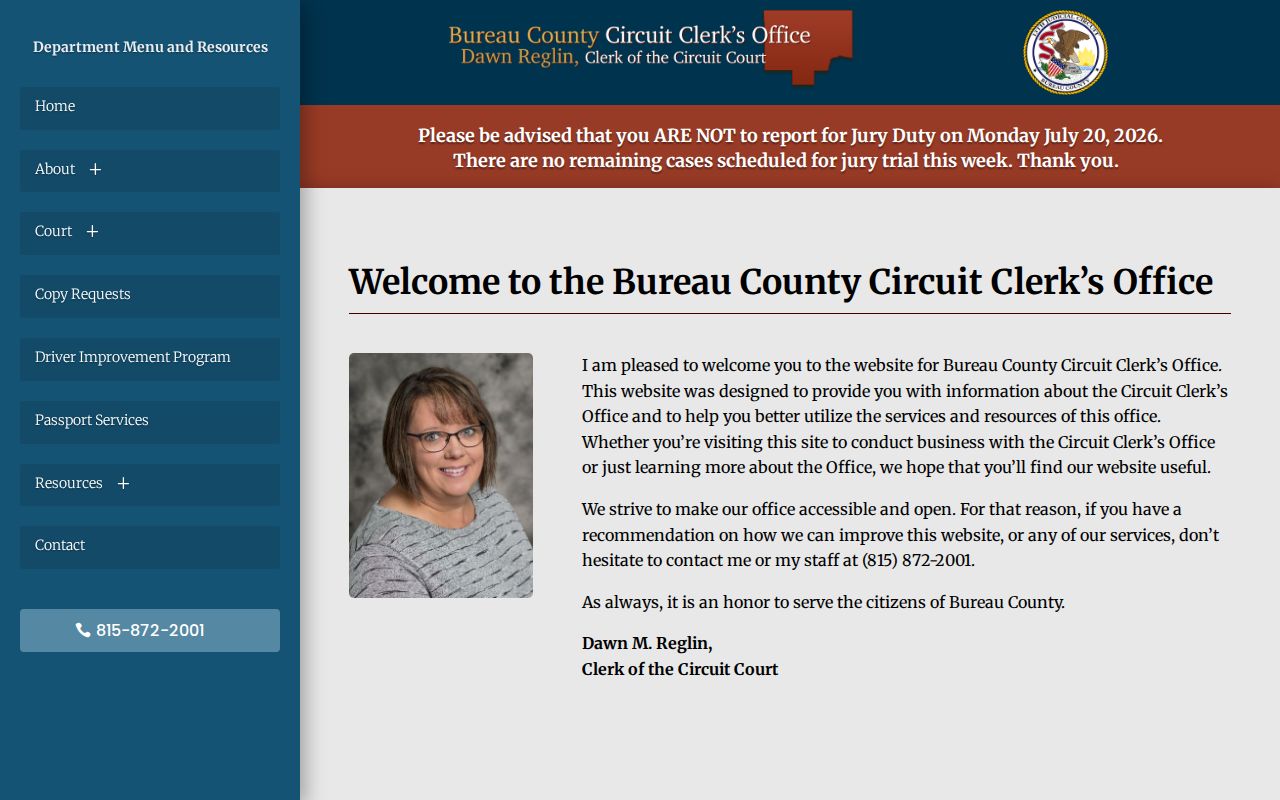
The gateway connects a remote search with the office that controls the authoritative file.
Bureau County Criminal Case Codes
Bureau County case numbers use a year, a case-type code, and a sequence. The clerk's case-type list helps readers separate a CF felony from a CM misdemeanor or DT DUI matter. The label describes the file category at filing. It does not establish guilt, and a filed charge may later be amended or dismissed.
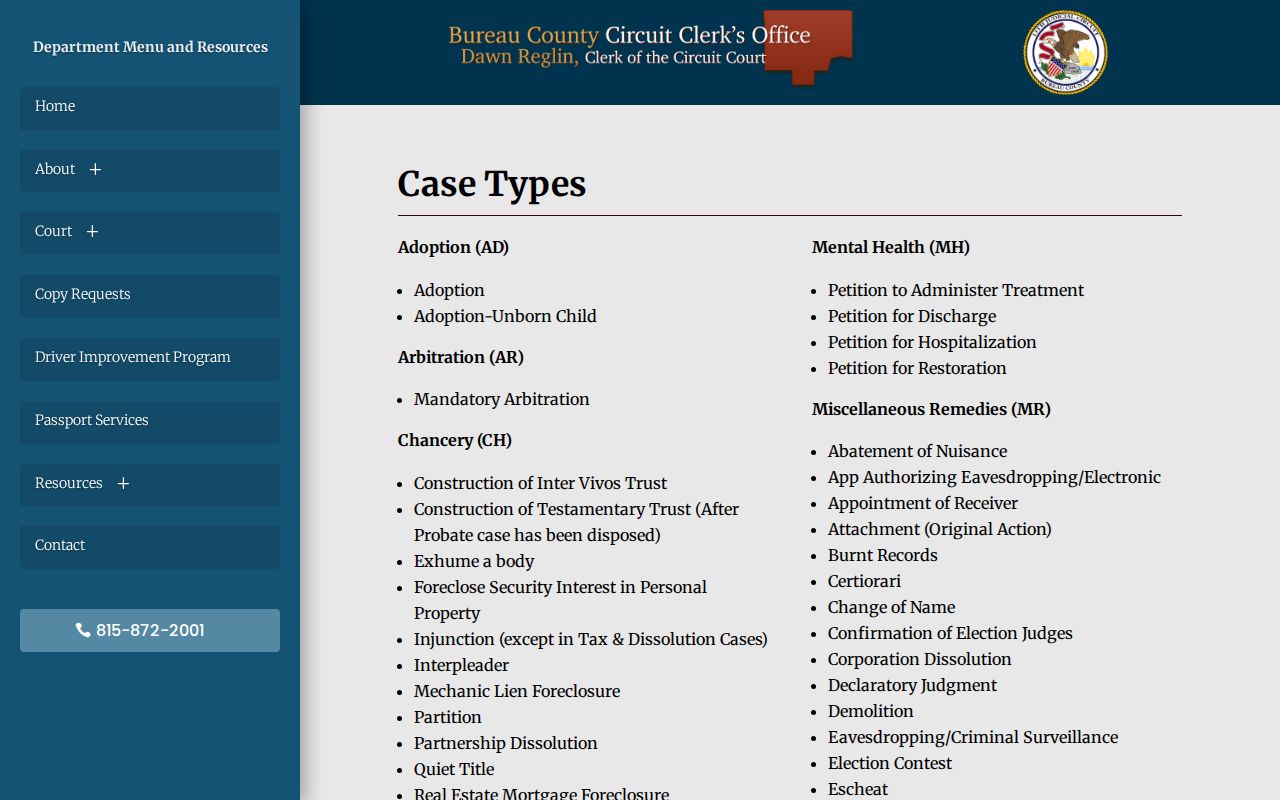
The code is most useful as a search key when paired with the full case number.
- Disposition
- The result of a count, such as conviction, dismissal, or acquittal.
- Nolle prosequi
- A prosecutor's formal choice not to continue a charge at that time.
- Supervision
- An Illinois outcome that may avoid a judgment of conviction after successful completion.
- Docket
- The date-ordered list of filings, hearings, and court orders.
Search Bureau County Case Records
Judici provides free single-court access for participating Illinois courts. Bureau County criminal and civil coverage is current from late 1988. Search by a known case number when possible. A name search may require spelling variants or a middle initial. Human verification can interrupt a search, and sealed or suppressed cases will not appear.
The official Judici search interface shows how readers begin a Bureau County criminal case query.
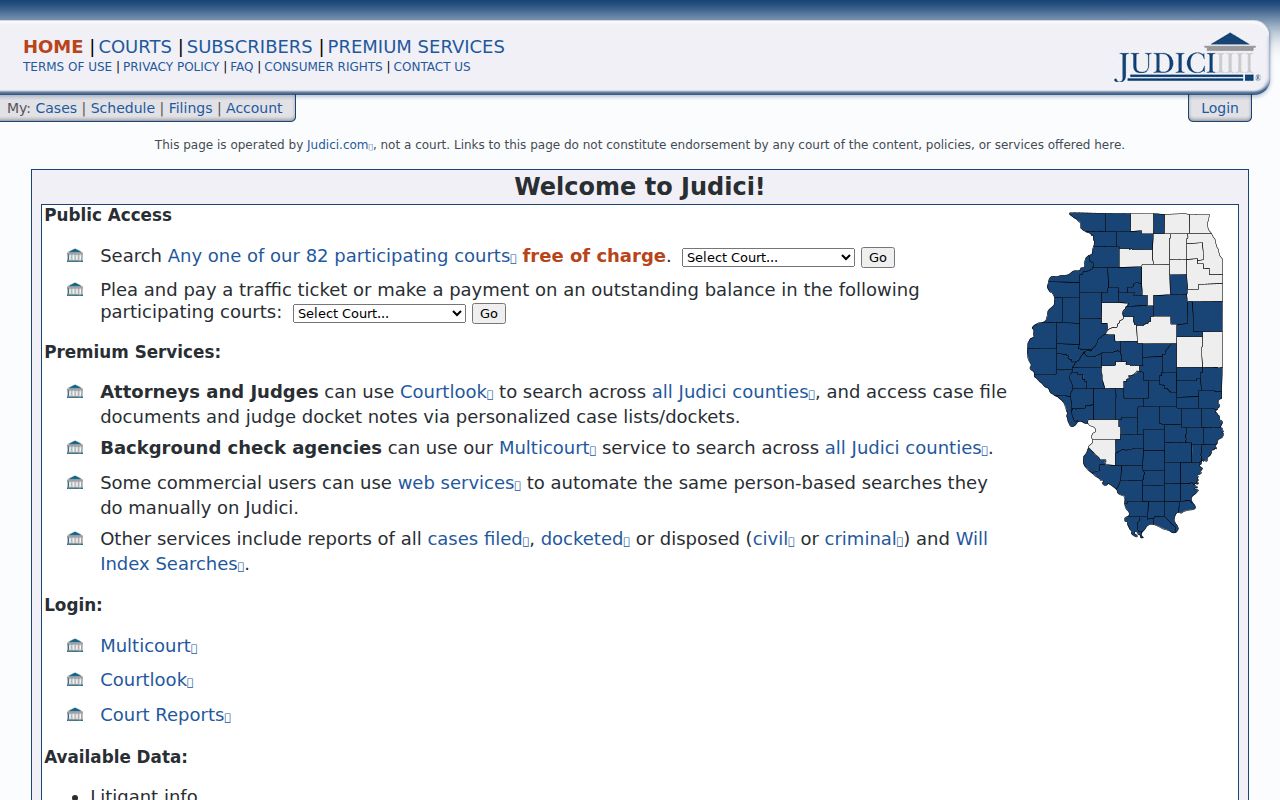
The court selection and search type must be set before names or case numbers can return the right local docket.
- Open Judici and select Bureau County, Illinois Circuit Court.
- Choose a person search or enter the exact case number.
- Use surname, first name, and middle initial carefully to narrow results.
- Open the matching docket and review every charge, event, and disposition.
- Ask Room 100 for a plain or certified copy when the summary is not enough.
| Field | Type | Required | Use |
|---|---|---|---|
| Court | Dropdown | Yes | Select Bureau County Circuit Court |
| Search type | Control | Yes | Person or case number |
| Last name | Text | Person search | Try verified spelling variants |
| First or middle name | Text | Optional | Narrows common surnames |
| Case number | Text | Case search | Enter year, code, and sequence |
The participating-court list confirms Bureau County's place in the system.
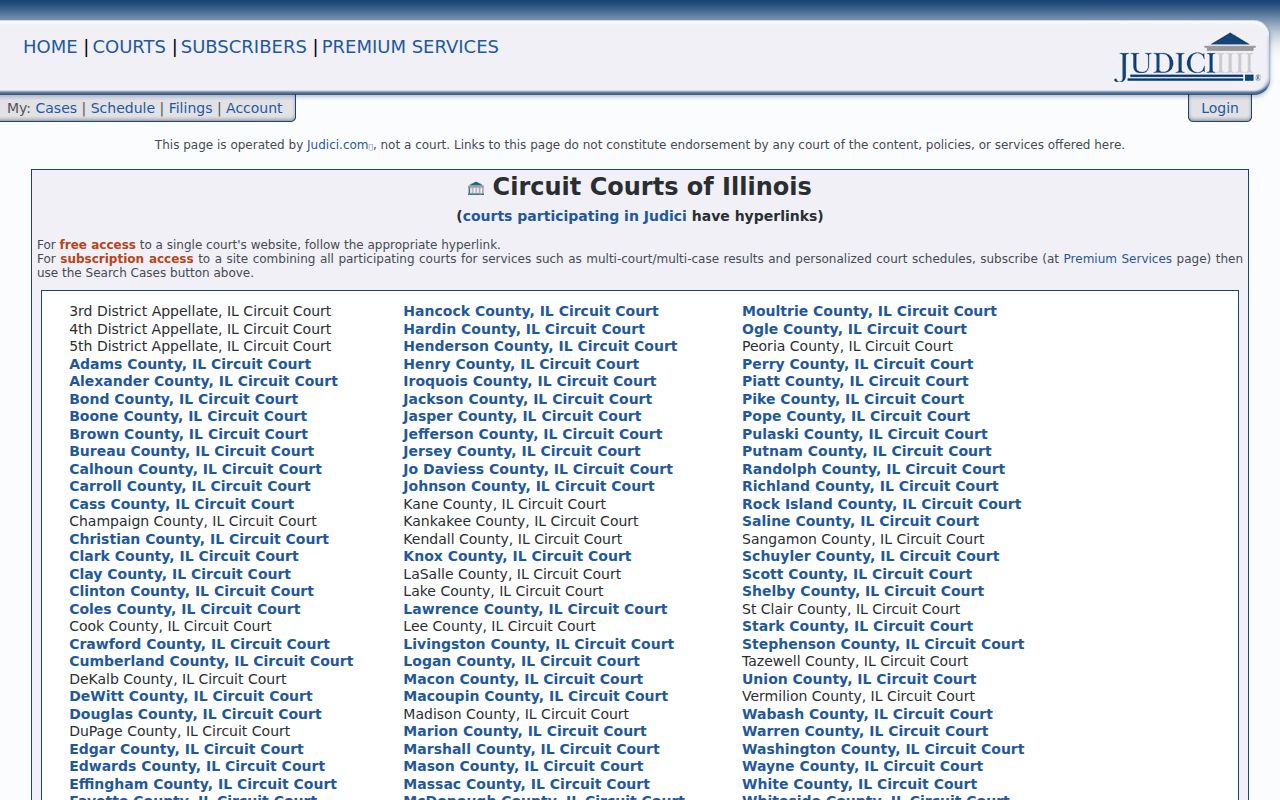
Choosing the correct county matters because free access searches one participating court at a time.
Bureau Court Files in Room 100
The public workstation stands in the front part of the clerk's main-floor office in Room 100 at 700 South Main Street, Princeton. Traffic, Criminal, and Civil staff work in that area. The counter is open Monday through Friday from 8:00 a.m. to 4:00 p.m. The Criminal Division uses (815) 872-2001, extension 559. It can address older matters, ambiguous case numbers, document availability, and copy requests.
Remote access is intentionally narrower than courthouse access. A Judici summary does not replace the signed order or certified record. The clerk warns that sealed and suppressed matters cannot be viewed online. Copy charges apply, but the official county material reviewed does not state a criminal-copy or certification rate. Call before travel if a specific pleading or older file is needed.
Bureau County Circuit Clerk
Room 100
700 South Main Street
Princeton, IL 61356
(815) 872-2001 ext. 559
Monday-Friday, 8:00 a.m.-4:00 p.m.
Note: Free courthouse parking is listed, while Bureau-Putnam rural transit requires advance arrangements and no local taxi service is identified.
Bureau County Case File Contents
A case file follows the prosecution rather than the arrest. Its header can identify the court, case number, case type, filing date, and current status. Party entries may list the defendant, the State of Illinois, and attorneys. Charge lines should be read one by one because a single Bureau County criminal case may contain both dismissed and convicted counts.
| Case and court | File number, type, filing date, status, and closing date where shown. |
|---|---|
| Charging document | Complaint, information, or indictment stating the filed allegations. |
| Charges | Count, statute, class, filed or amended date, and count-level result. |
| Docket entries | Chronological filings, minutes, orders, and judge or hearing entries. |
| Hearings | Date, time, hearing type, courtroom, or judge where published. |
| Disposition | Conviction, dismissal, acquittal, supervision, or other final action. |
| Sentence and money | Custody, probation, conditions, fines, costs, balances, and payment entries where docketed. |
Documents appear only when the participating court enables public links. Protected identifiers and victim or minor data can be removed. For a deeper county-wide distinction between court, booking, and ISP records, use the Bureau County criminal history overview.
Read Bureau County Count Results
The case caption alone cannot answer whether a person was convicted. Review the final disposition for each count. A dismissal means the charge ended without conviction. Nolle prosequi means the prosecutor chose not to proceed at that time. An acquittal is a not-guilty decision after trial. Supervision is distinct from a conviction under Illinois law when its terms are completed as required.
Charges may change between filing and judgment. An amended count can replace the first allegation, and one count may be dismissed while another results in judgment. Financial entries also need context. They may show fines, statutory assessments, costs, balances, and payment history, but payment does not by itself explain the final charge result. The signed judgment and sentencing order control when a summary is unclear.
Note: A CF label identifies a felony case category, not proof that the filed allegation became a felony conviction.
Bureau County Criminal Case Stages
A Bureau County criminal file starts when a prosecutor files a complaint or information, or when a felony matter produces an indictment. The first court events address the allegation, counsel, and pretrial release. Arraignment is the hearing where the charge is formally presented and a plea is entered. Discovery and motions then shape what evidence and issues can reach trial.
Case flow: Charges Filed › Arraignment › Pretrial › Plea or Trial › Disposition › Sentencing
A negotiated plea or trial leads to judgment. Sentencing can include custody, probation, supervision, fines, or other lawful terms. Later docket activity may show a petition to revoke, post-judgment motion, appeal, or satisfaction of costs. The court file is the procedural history. It does not absorb the police narrative or the ISP fingerprint repository record.
When Bureau Judici Falls Short
Bureau County's reported remote coverage begins in late 1988. An older matter may still exist even when the online search returns nothing. A missing result can also reflect a spelling difference, a delayed new filing, a restricted file, or the portal's human-verification barrier. Try the full case number first, then a careful name search, before asking the clerk to check the authoritative index.
The public workstation may provide more access than a remote summary, but legal restrictions still apply. Juvenile matters are handled in the clerk's back office and are restricted. Teen Court is a local diversion program, not a public juvenile docket. Sealing limits public visibility while preserving access for authorized users. Expungement removes qualifying records under Illinois procedure and statutory exceptions.
The Circuit Clerk's public-record information explains the local records channel.
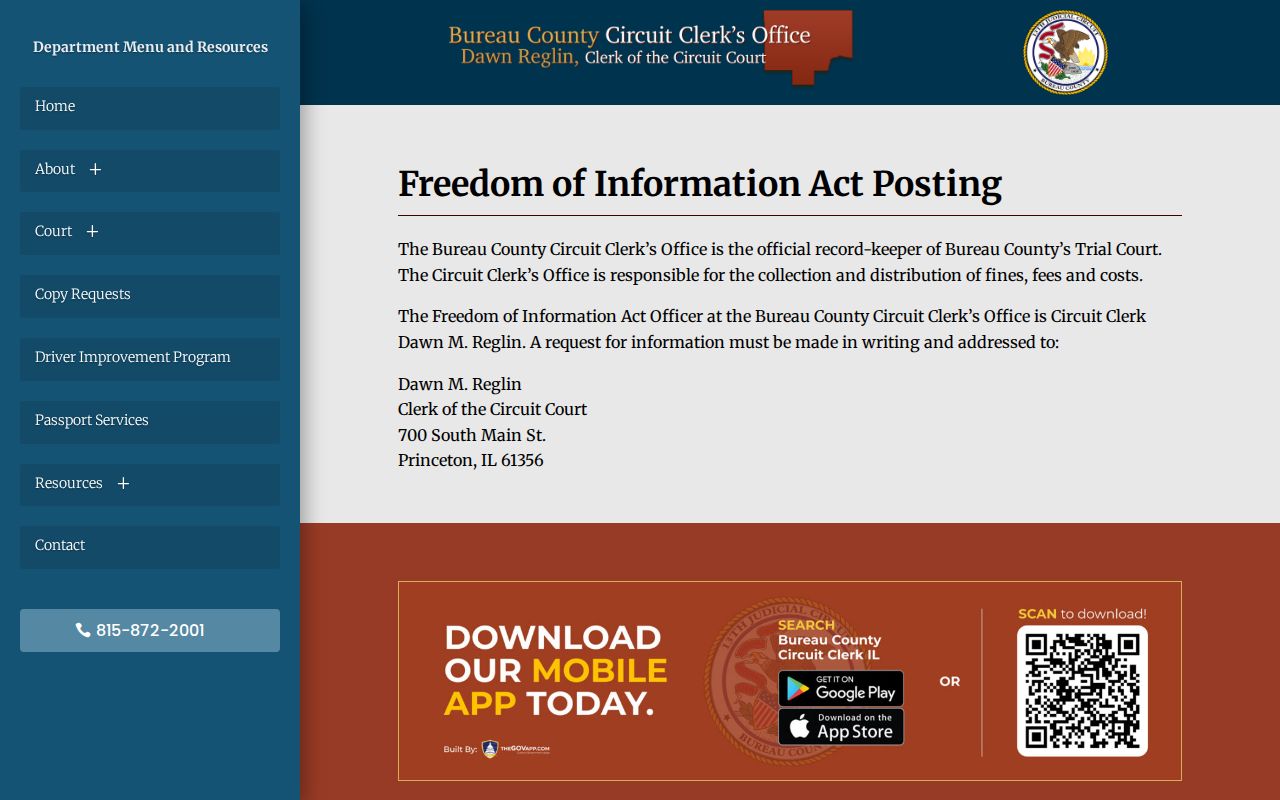
Questions about an absent court case should go to the clerk rather than an unofficial people-search service.
Federal Cases Beyond Bureau Court
Bureau County lies within the U.S. District Court for the Central District of Illinois. Federal criminal dockets do not appear in a county-only Judici search. PACER is the federal registration and document-access system, with charges governed by the federal judiciary's current schedule and its quarterly waiver rule.
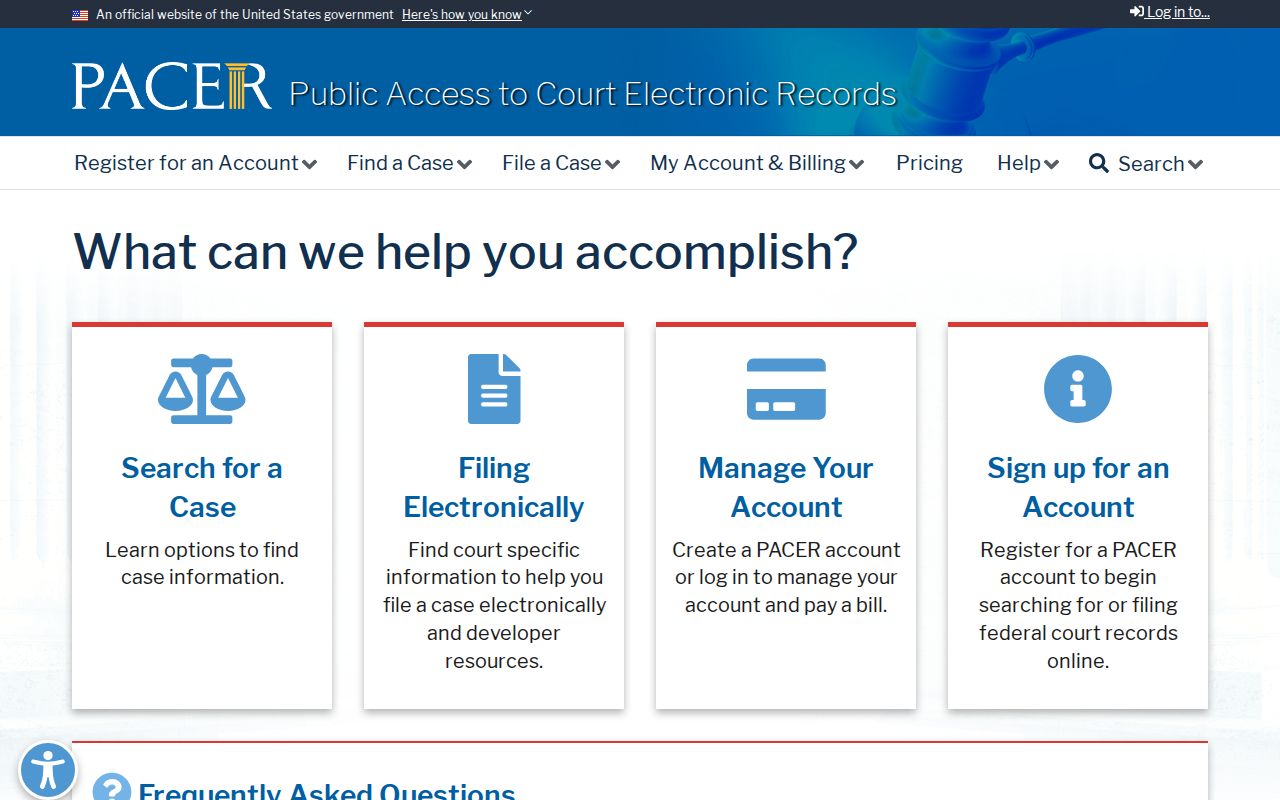
PACER answers a federal court question, not a Bureau County Circuit Court question.
A federal docket, an FBI Identity History Summary, and a Bureau of Prisons custody profile are separate products. None substitutes for the final disposition in Room 100. Choose the record holder based on where the prosecution occurred and what fact needs verification.
Bureau Case Access and Restrictions
Illinois circuit clerks preserve court records and provide access under law and court rules. The Illinois Remote Access Policy makes electronic access narrower than courthouse access. Sealed, suppressed, and juvenile cases may be absent. Social Security numbers, financial account data, and protected victim or minor details should not appear in public views.
The Circuit Courts Act record provision supports clerk custody and lawful copy access. Illinois FOIA applies to public bodies, but it does not force release of sealed court material. When only part of a responsive government record is exempt, a requester can ask for the nonexempt parts. A certified result must come from the clerk, and the originating office should verify any record before it is relied upon.